


Share


Businesses now use artificial intelligence to create automated workflows which also enhance customer experiences and enable improved decision-making based on their internal data. The first question that arises after companies finish their initial testing phase is which artificial intelligence solution matches their specific operational requirements.
Existing model outputs receive better results through some organizations which utilize prompt engineering techniques. Some organizations choose to modify model behavior through the process of fine-tuning their models. Businesses use Retrieval-Augmented Generation (RAG) to integrate AI systems with real-time operational data which has resulted in RAG becoming one of the most rapidly expanding methods.
The distinction between RAG and Fine-tuning and prompt engineering needs to be understood because each method addresses a specific problem. Different AI systems need to be built for a customer support chatbot and a healthcare assistant and an internal knowledge system because their accuracy needs and scalability demands and data freshness requirements differ. Organizations which implement artificial intelligence solutions now need to monitor hallucinations and outdated responses and implementation expenses and system upkeep difficulties. The rising demand for custom RAG development solutions across all sectors during 2026..
RAG, which stands for Retrieval-Augmented Generation, operates as an artificial intelligence framework that merges large language models with external data retrieval technologies. RAG retrieves relevant information from connected databases and documents and CRMs and PDFs and websites and internal knowledge systems to generate responses instead of using information that the model acquired during training.
The design of RAG provides companies with an effective tool for managing their operations when they have to handle information that keeps changing.
Unlike static models, RAG systems can:
- Pull real-time information from connected sources
- Generate more context-aware responses
- Reduce outdated AI outputs significantly
- Improve business-specific answer accuracy
- Support enterprise knowledge management systems
- Scale across multiple internal data environments
Many modern RAG AI use cases involve:
- Internal employee knowledge assistants
- Enterprise search systems
- AI-powered customer support
- Legal and compliance document retrieval
- Financial reporting assistants
- AI onboarding systems
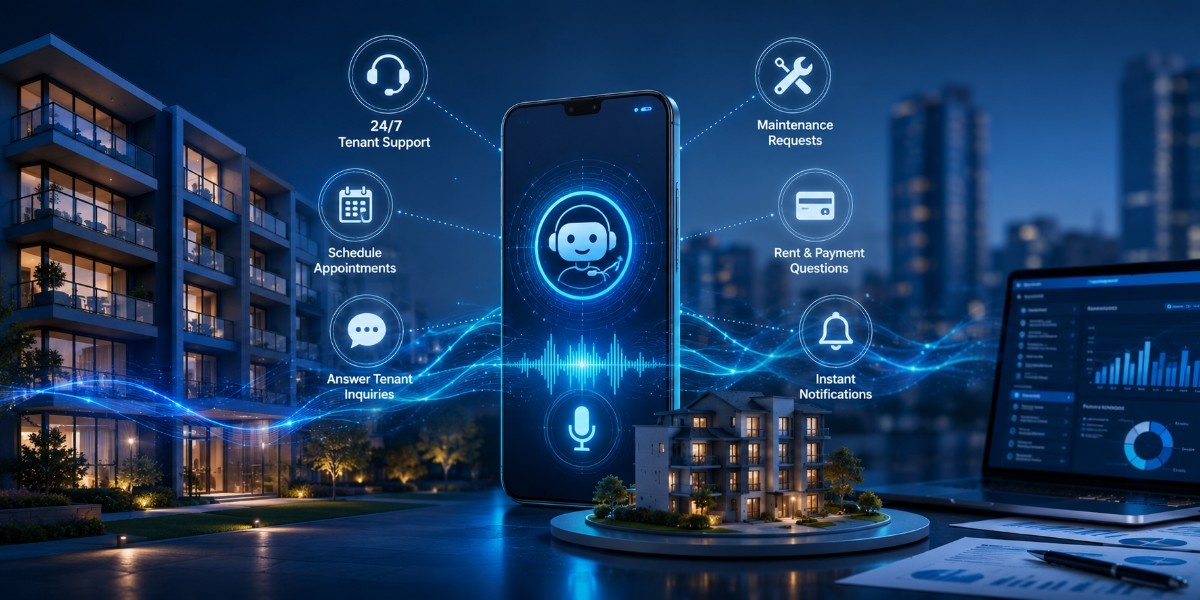
One of the fastest-growing implementations is the RAG chatbot for business website. Businesses are increasingly replacing basic scripted bots with AI systems capable of retrieving accurate answers directly from company documentation, policies, product catalogs, and support resources.
The healthcare industry is also seeing rapid adoption. A common RAG AI healthcare use cases involves connecting AI systems with patient documentation, medical research databases, treatment guidelines, and healthcare workflows to provide more accurate contextual assistance while maintaining updated information access.
This is why many enterprises are investing in custom RAG development services instead of relying entirely on generic AI tools.
Fine tuning is the process of retraining a pre-trained AI model on specialized datasets so it can behave differently for a particular task, industry, or business objective.
Instead of connecting the model to external knowledge sources like RAG, fine tuning changes the model itself.
Businesses often use fine tuning when they want AI systems to:
- Follow a specific communication style
- Understand industry terminology better
- Produce highly specialized outputs
- Improve performance on narrow tasks
- Align responses with internal business standards
- Handle repetitive domain-specific requests
A healthcare company may fine tune a model on medical documentation. A legal firm may train a model using contract data. An ecommerce company may fine tune AI for product recommendation behavior.
However, businesses comparing RAG vs Fine tuning should understand one important difference: fine tuned models still rely on training-time knowledge unless retrained again later.
This creates challenges when:
- Information changes frequently
- Business policies evolve
- Product catalogs update regularly
- Regulations shift often
- Real-time accuracy becomes important
Fine tuning can also become expensive because retraining large models requires infrastructure, technical expertise, monitoring, and long-term maintenance.
Traditional large language models generate responses using only the information stored inside their training data. They do not naturally retrieve updated external knowledge unless connected to additional systems.
This creates several limitations.
A traditional model may:
- Provide outdated answers
- Invent information confidently
- Struggle with company-specific data
- Miss recent policy updates
- Fail with highly contextual business requests
This is one of the biggest differences in RAG vs traditional LLM architecture.
RAG systems retrieve external information first and then generate responses based on retrieved context. Because of this, businesses gain:
- Better factual grounding
- More accurate enterprise responses
- Improved contextual relevance
- Lower hallucination rates
- Stronger trust in AI-generated answers
Understanding how RAG reduces AI hallucinations is important for enterprise adoption. Hallucinations happen when AI generates information that sounds believable but is incorrect or fabricated.
RAG reduces this problem by:
-
Pulling verified business information before generation
- Grounding responses in source material
- Limiting unsupported output generation
- Improving answer traceability
- Reducing dependency on static training knowledge
This is one reason why many enterprises now prefer RAG systems over standalone LLM deployments.
Businesses adopting AI increasingly prioritize reliability over novelty. A system that produces inaccurate information consistently creates operational risk, especially in industries like healthcare, finance, legal services, and customer support.
RAG addresses many of these business concerns directly.
Key business benefits include:
- Access to updated information without retraining the model
- More accurate responses from connected knowledge sources
- Reduced hallucination risks in business environments
- Better handling of company-specific documentation
- Lower maintenance compared to repeated fine tuning
- Faster implementation across enterprise systems
Many modern RAG AI usecases involve internal business intelligence and customer-facing automation because retrieval systems improve trustworthiness significantly.
A growing RAG in AI healthcare use cases includes:
- Clinical documentation assistants
- AI-powered patient support systems
- Healthcare compliance retrieval
- Medical research summarization
- Hospital knowledge management systems
Businesses are also increasingly using RAG chatbot for business website implementations to improve customer engagement while maintaining accurate product and support information.
As AI adoption expands, enterprise leaders are placing greater emphasis on explainability, source-backed responses, and factual consistency. This is another reason why companies are investing in custom RAG development services for scalable AI deployment.

The decision between RAG vs Fine-Tuning depends entirely on business goals, data behavior, and operational requirements.
RAG is often better when:
-
Information changes frequently
- Businesses require real-time answers
- Internal documentation updates constantly
- Accuracy is more important than creativity
- Companies need scalable enterprise search
Fine tuning is often better when:
-
Behavior customization is the priority
- Tasks are highly specialized
- Response style consistency matters heavily
- The business operates within narrow domains
- Knowledge changes less frequently
Some enterprises combine both approaches.
For example:
- Fine tuning improves tone and task specialization
- RAG provides updated external business knowledge
- Prompt engineering controls response behavior
This hybrid approach is becoming increasingly common among enterprises using advanced AI systems.
Businesses exploring custom RAG development services often begin with retrieval systems first because implementation is faster and maintenance complexity is lower compared to large-scale retraining pipelines.
|
|
Ideal Business Scenario |
Flexibility |
Setup Complexity |
Maintenance Level |
Prompt Engineering |
Testing ideas, content generation, and general AI assistance |
High |
Low |
Low |
RAG Architecture |
Business systems connected to live or private company data |
Medium |
Medium |
Medium |
Fine-Tuning Models |
Industry-specific workflows requiring controlled AI responses |
Low |
High |
High |
Prompt Engineering Works Best When:
- Businesses need fast AI implementation
- Tasks change frequently across teams
- There is limited access to training data
- AI is being used for experimentation or support tasks
RAG Is More Effective When:
- Information changes regularly
- Businesses rely on internal knowledge sources
- Accuracy and factual consistency are critical
- AI systems must reduce hallucinations and outdated responses
Fine-Tuning Is a Strong Choice When:
- Businesses require highly specialized outputs
- AI behavior must remain consistent
- Industry terminology is highly specific
- Workflows follow fixed formats or structures
The Reality for Enterprise AI in 2026
Most advanced AI systems no longer rely on a single method. Businesses are increasingly combining Prompt Engineering for control, RAG for real-time retrieval, and Fine-Tuning for specialized behavior to create more scalable and reliable AI solutions.
AI adoption is evolving rapidly, and several major RAG AI trends 2026 are shaping enterprise AI development.
Some of the biggest trends include:
- Agentic AI systems connected with retrieval pipelines
- Multimodal RAG using text, images, PDFs, and video
- AI copilots for enterprise knowledge systems
- Personalized retrieval systems for employees and customers
- Industry-specific retrieval architectures
- Secure private enterprise RAG deployments
- AI governance layers for enterprise retrieval accuracy
The rise of the RAG chatbot for business website is also accelerating in 2026. Businesses want AI systems capable of:
- Understanding customer intent better
- Pulling product-specific answers instantly
- Handling complex support questions
- Providing contextual recommendations
- Reducing dependency on support teams
Another major trend is the growing enterprise focus on how RAG reduces AI hallucinations. Businesses now recognize that factual reliability matters more than flashy AI responses, especially in customer-facing and compliance-heavy industries.
As enterprises continue evaluating RAG vs traditional LLM systems, retrieval-based AI is quickly becoming the preferred architecture for business environments that require accuracy, scalability, and live information access.
The three approaches RAG, Fine-Tuning, and prompt engineering create different advantages for business applications which need their separate evaluation. Prompt engineering improves interaction quality. Fine tuning customizes model behavior. RAG connects AI systems with real-world business knowledge.
The 2026 business environment will see most enterprises choose retrieval-based AI because they require systems that deliver precise real-time knowledge together with contextual understanding while avoiding the need for continuous model updates. The requirement applies particularly to organizations that use enterprise search systems and internal knowledge assistants and healthcare AI systems and customer support AI platforms.
As adoption grows, businesses evaluating RAG vs Fine-tuning should focus less on AI hype and more on operational needs, scalability requirements, maintenance costs, and information accuracy.
The upcoming business world will depend on various methods for enterprise artificial intelligence, yet RAG has emerged as a fundamental technology which supports business AI systems that require both reliability and scalability.