

Share


Crypto wallets work by managing the keys that let you access and transfer assets recorded on a blockchain. A private key signs transactions, a public key helps verify those signatures, and a wallet address tells someone where to send funds. Your cryptocurrency stays on the blockchain; the wallet provides the tools to interact with it.
Open a wallet and those functions appear as a balance, a receiving address, and a send button. Understanding what happens behind that screen helps you choose a wallet, approve payments, and protect your recovery backup.
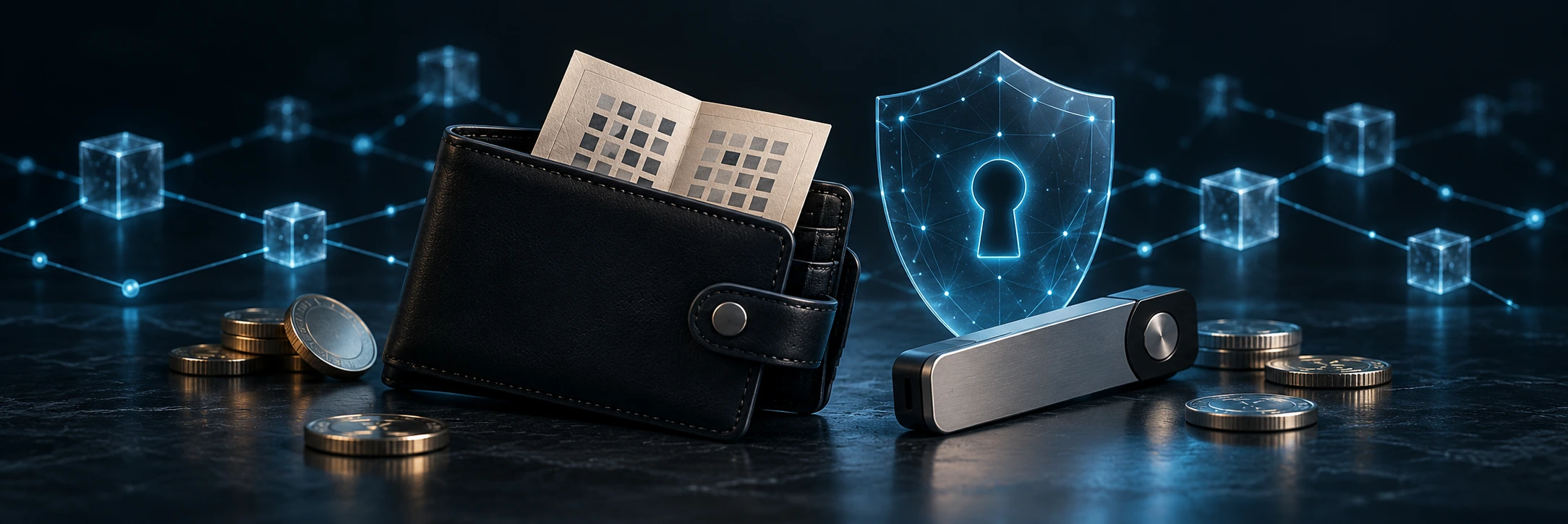
A cryptocurrency wallet is an application or device for interacting with blockchain accounts. It shows balances, prepares transactions, and helps manage the credentials needed to approve them.
Your coins are recorded on the blockchain. They are not files sitting inside your phone or hardware wallet. In a typical self-custody wallet, the sensitive information is the private key or the backup used to regenerate it.
That explains why replacing a broken phone does not necessarily mean losing your crypto. With the correct recovery information and compatible software, you can restore access.
For businesses building a wallet app, key management and recovery need attention from the start. Eminence Technology’s cryptocurrency wallet development services support projects where these decisions shape how users access and manage their assets.
Public and private keys form a mathematically related pair. Each has a different job, and knowing one does not mean you can practically calculate the other.
|
|
|
|
|
|
|
|
|
|
|
|
|
|
|
|
|
|
|
|
What Is a Public Key in Crypto?
A public key is generated from a private key using cryptography. The network uses it when checking whether a transaction signature is valid.
People often say you receive crypto using your public key. Usually, you actually share a wallet address derived from a public key or another spending condition. Address formats depend on the blockchain and account type.
Sharing an address does not give someone permission to spend. It can, however, expose transaction activity on public blockchains. Our blockchain development guide explains the broader technology behind these shared records.
What Is a Private Key in Blockchain?
A private key is a secret value used to produce digital signatures. With a conventional single-key account, someone who obtains that key can authorize transfers without your wallet password.
For Bitcoin, a private key is a 256-bit value within the valid range. It can be represented as 64 hexadecimal characters or encoded in other formats. A seed phrase is a different representation of recovery information, not simply another name for one private key.
Ethereum’s documentation on accounts and key pairs explains the relationship between keys, signatures, and account addresses.
Suppose Maya wants to send cryptocurrency to Daniel. In a typical self-custody wallet, the process looks like this:
- Daniel shares a receiving address. Both people confirm the asset and network are compatible.
- Maya enters the payment details. Her wallet prepares a transaction and estimates the network fee.
- Maya approves the transaction. The wallet or connected signing device uses her private key to create a signature.
- The signed transaction is broadcast. The private key itself stays out of the broadcast.
- The network checks the transaction. Nodes verify the signature and other rules, including whether the funds can be spent.
- The transaction is included in a block. Confirmation and finality depend on the network.
Daniel normally does not need to keep his wallet app open to receive an on-chain payment. His wallet can display the updated balance when it next synchronizes.
For a business offering this experience, the wallet interface must connect reliably to network infrastructure. Eminence Technology’s blockchain development services address the application and integration work behind these transaction flows.
The useful question is who controls the keys and how they are protected. Wallets fall into two overlapping classifications.
Custodial versus non-custodial: With a custodial service, a provider manages the signing credentials. You access the service through its account system. With a non-custodial wallet, you control the credentials or authorization setup and take responsibility for recovery.
Hot versus cold: Hot wallets use signing keys in an internet-connected environment. Cold storage keeps signing keys offline. Hardware wallets are designed to isolate keys while allowing transactions to be signed and then broadcast through another device.
So, what is a DeFi wallet? Usually, it is a non-custodial wallet that connects to decentralized applications for activities such as swaps or lending. Its label does not remove smart contract or approval risks.
For product requirements and implementation choices, our crypto wallet development guide covers the development side in more detail.
Use a reputable wallet’s built-in generation process. Secure generation requires strong randomness; inventing a memorable key or using an unfamiliar online generator can undermine it.
Protect the backup with the same care as the wallet:
- Record a seed phrase offline and keep it away from cameras and shared spaces.
- Avoid screenshots, email drafts, and unencrypted cloud copies.
- Protect devices with strong access controls and current software.
- Check the destination and transaction details before signing.
- Never give recovery words to someone claiming to be customer support.
Common protection methods include encrypted key storage, hardware wallets, and, in business systems, hardware security modules. Encryption helps protect stored keys but cannot make a compromised device trustworthy during signing.
Bitcoin.org’s wallet security guidance explains backups, encryption, offline signing, and multisignature protection.
Losing a device differs from losing every way to authorize spending. Many wallets use a seed phrase, commonly 12 or 24 words, to regenerate multiple keys.
If you have a valid backup and any required passphrase, compatible software may restore access. If all signing credentials and usable backups are lost, a conventional self-custody wallet generally has no password-reset service that can recover the funds.
Other designs can include additional signers or recovery rules. Those options must already exist in the wallet’s authorization setup.
Crypto wallet development starts with custody, recovery, supported networks, and understandable signing screens. Multi-currency wallet development also requires handling different address formats, fees, and transaction rules.
For wallets interacting with smart contracts, users need clear explanations of token approvals and spending permissions. Our smart contract development guide discusses related scope and cost considerations.